
THE LIVING COLLECTION / SPECIES DOSSIER
African Violet
Streptocarpus spp.
A closer look at the African Violet growing in DC’s Indoor FlatScape. Explore its compact growth habit, flowering cycle, moisture-sensitive root zone, propagation, and the observations that come from growing it as part of a real living collection.
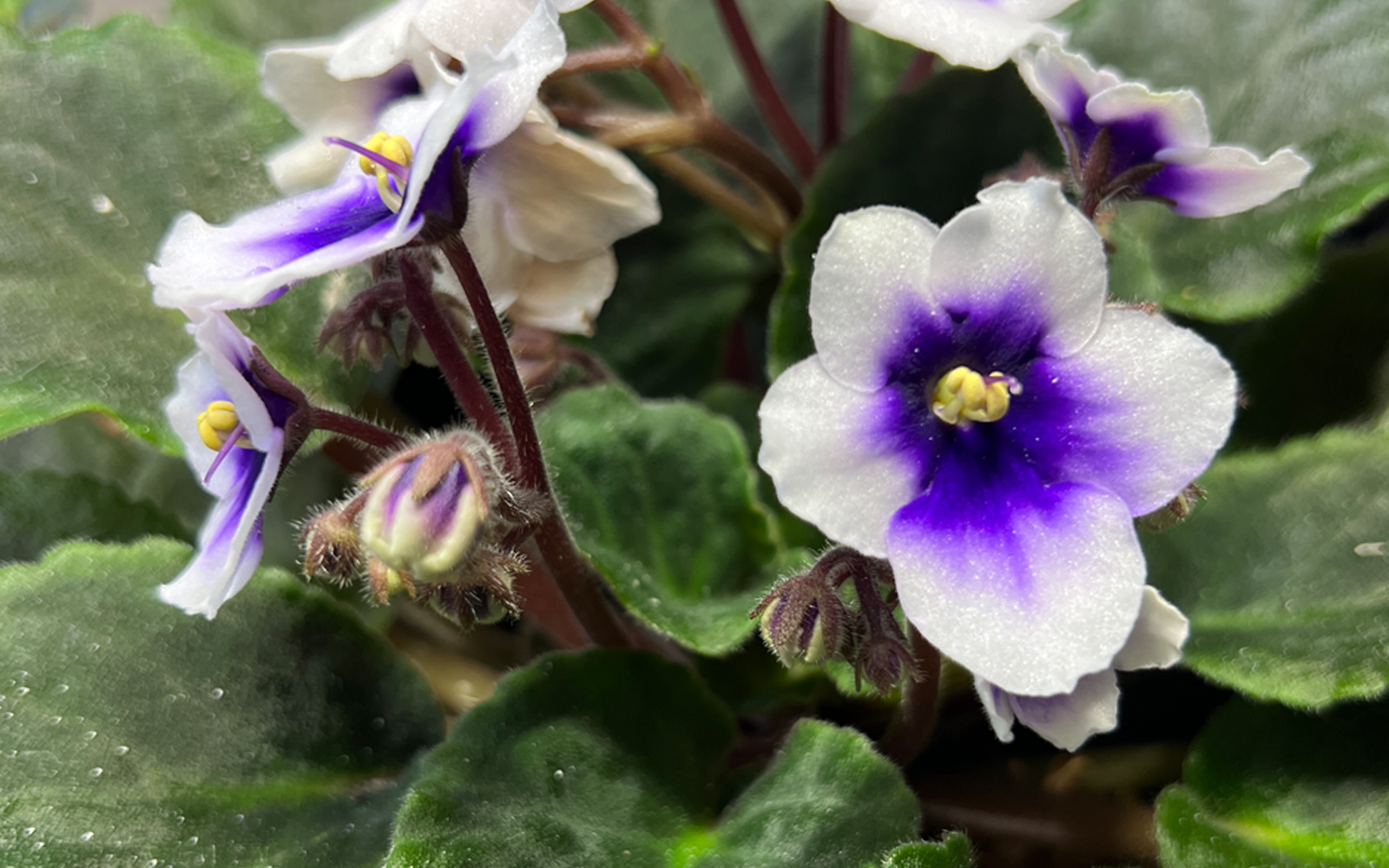
BOTANICAL RECORD
Species Record
Botanical identification: Streptocarpus spp.
Common name: African Violet
Family: Gesneriaceae
Native range: Eastern tropical Africa, particularly Tanzania and southeastern Kenya
Growth habit: Compact rosette-forming perennial
Growth characteristics: Soft, often fuzzy leaves form a low rosette while flower stalks rise above the foliage. Cultivars vary widely in flower color, leaf shape, size, and growth habit.
Collection status: Growing in DC’s Indoor FlatScape.
FROM DC’S COLLECTION
Specimen Notes
This record follows the African Violet growing in DC’s Indoor FlatScape. General care information describes the African violet group, while the observations below document what happens with this particular plant.
What DC Is Learning
African Violets bring a different rhythm to the collection. Their compact root systems, soft foliage, and flowering cycle make moisture balance, container size, and light especially important.
Current observations: To be updated from the next documented African Violet check.
Record status: Living record. Care decisions and observations may change as the plant grows.
GROWING CONDITIONS
Care & Environment
Light
African Violets generally perform well in bright, indirect light. Insufficient light can reduce flowering and produce stretched growth, while harsh direct sun can damage the leaves. Supplemental lighting can be useful when natural indoor light is limited.
Temperature & Humidity
Warm, stable indoor temperatures are generally suitable. Protect the plant from cold drafts and abrupt temperature changes. Moderate household humidity can work well when combined with good air movement.
Flowering
Consistent light, a healthy root system, appropriate nutrition, and stable growing conditions all influence flowering. Lack of blooms should be evaluated together with the plant’s overall growth rather than treated as a single isolated problem.
Leaf Care
The leaves are soft and often covered with fine hairs. Avoid aggressive wiping, polishing products, and unnecessary oils. Remove dust or debris gently when needed.
ROOT-ZONE CARE
Water & Nutrition
Watering
Keep the root zone evenly moist but not continuously saturated. Allow the upper portion of the substrate to begin drying before watering again. Small containers can change moisture quickly, so observe the plant and root zone rather than relying on a fixed calendar.
Watering Method
Water can be applied from above or below as long as excess water drains and the root zone does not remain waterlogged. Avoid leaving water sitting in the crown for extended periods.
Water Quality
Water quality matters, particularly when fertilizer is also being used. Low-mineral water can help reduce salt accumulation in small containers, although the plant’s response and substrate condition should guide adjustments.
Substrate
Use a light, porous, moisture-balanced medium that holds enough water for steady growth while still allowing oxygen around the roots. Dense, compacted substrate can remain wet too long.
Nutrition
Use a balanced fertilizer at an appropriate dilution during active growth. Avoid excessive fertilizer, which can contribute to salt accumulation and root stress.
Container Size
African Violets generally perform well in relatively small containers. Oversized pots can surround a modest root system with more wet substrate than the plant can use efficiently.
PROPAGATION
Growing New Plants
African Violets are commonly propagated from individual leaves, making them one of the more interesting plants in the FlatScape for small-scale propagation experiments.
Leaf Cuttings
Select a healthy mature leaf and remove it with a portion of the petiole attached. Insert the petiole into a suitable moist, airy propagation medium.
Rooting
Keep the cutting warm, evenly moist, and in bright indirect light while roots and new plantlets develop. Avoid saturating the medium.
New Plantlets
Small plantlets may eventually emerge near the base of the original leaf cutting. Allow them to develop sufficient size and roots before separating them.
Division
Some plants may produce multiple crowns or offsets. These can sometimes be separated once each division has enough roots and foliage to support itself.
After Propagation
Move established young plants into appropriately sized containers with a suitable moisture-balanced substrate. Avoid overpotting while the root systems are still small.
OBSERVATION & TROUBLESHOOTING
What to Watch For
Yellowing Leaves
Yellow leaves can result from normal aging, excessive moisture, root stress, nutrient imbalance, or environmental changes. Review the root zone and recent care before changing several variables at once.
Brown or Crispy Edges
Consider inconsistent moisture, fertilizer accumulation, dry air, physical damage, or water-quality issues. Look for patterns across the plant rather than diagnosing from a single leaf.
Soft or Limp Leaves
Loss of firmness can result from dehydration, damaged roots, prolonged saturation, or sudden environmental stress. Check the root zone before automatically adding more water.
No Flowers
Review light levels, nutrition, temperature, root health, and container size. Healthy foliage without flowers may simply indicate that one or more growing conditions are not yet supporting blooming.
Crown Problems
Persistent moisture trapped in the crown can increase the risk of tissue damage. Avoid allowing water to sit around the central growing point for long periods.
Pest Inspection
Inspect leaf undersides, petioles, crown growth, and flower stems for mites, mealybugs, thrips, or other pests. Identify the problem before selecting a treatment.
THE LIVING RECORD
DC’s Field Record
This record follows the actual African Violet growing in DC’s Indoor FlatScape. It will document new leaves, flowering, root development, propagation, watering response, environmental changes, and the lessons that come from observing the plant over time.
Current Specimen
Collection: DC’s Indoor FlatScape
Identification: African Violet, Streptocarpus spp.
Root-zone approach: Moisture-balanced, aerated root zone
Exact cultivar: Not yet confirmed.
Current measurements: Not yet entered.
Latest observation: To be updated from the next documented African Violet check.
What DC Is Learning
This space will record what the plant actually does: new leaves, flower production, crown development, propagation attempts, changes in watering, root behavior, and responses to light. Observations will be dated so they remain useful as the plant changes.
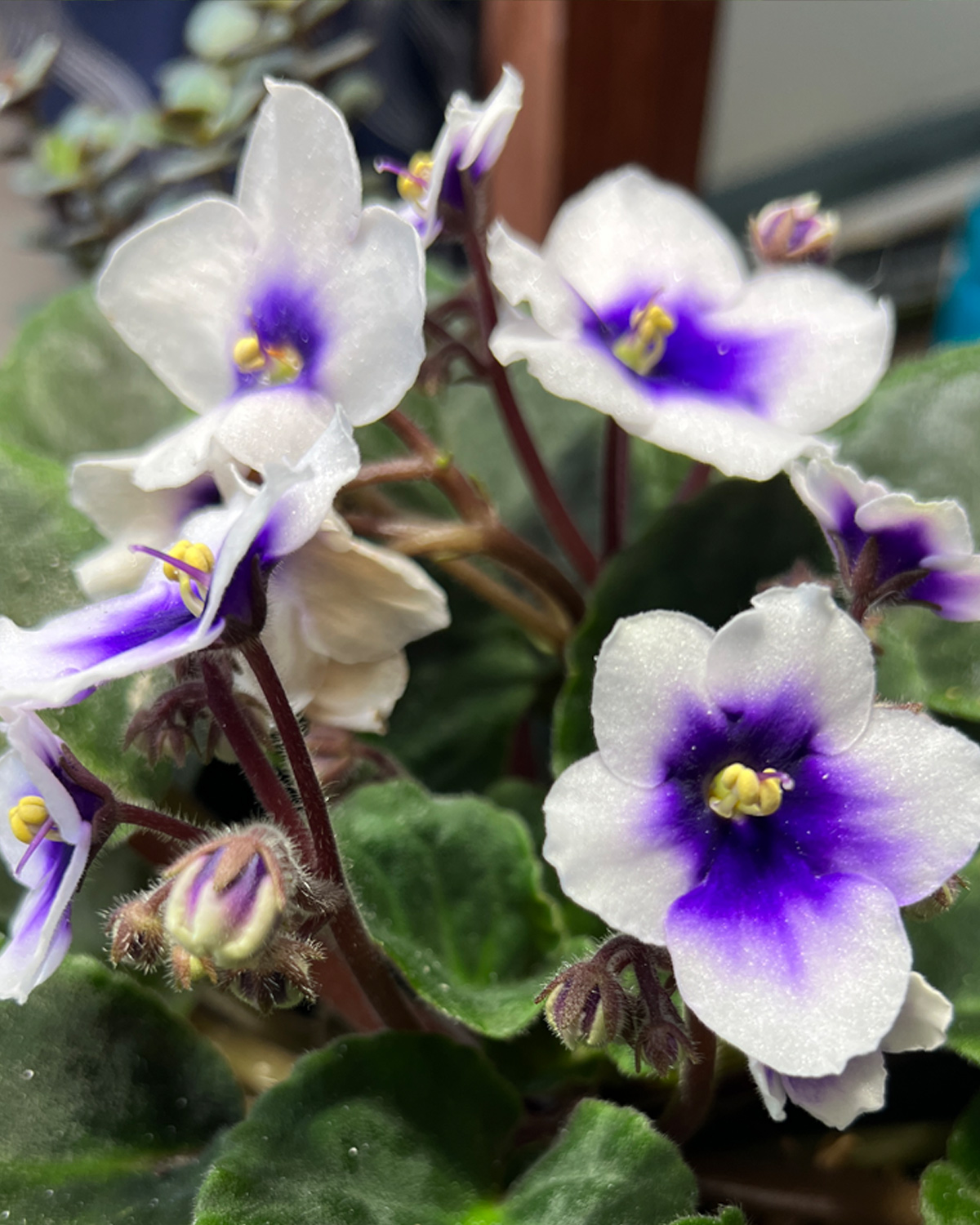
Field photograph · DC’s Indoor FlatScape
Additional photographs and dated observations will be added as the specimen develops.
THE REFERENCE LIBRARY
Keep the Field Guide
The website dossier is the living reference. The downloadable edition will bring the care information together with expanded procedures, flowering guidance, leaf propagation techniques, troubleshooting references, and space for personal notes.
African Violet Care Guide: Edition in preparation.
As the collection grows, this dossier will continue to be updated with new photographs, observations, and related field notes.