
THE LIVING COLLECTION / SPECIES DOSSIER
Dragon’s Tooth Alocasia
Alocasia ‘Dragon’s Tooth’
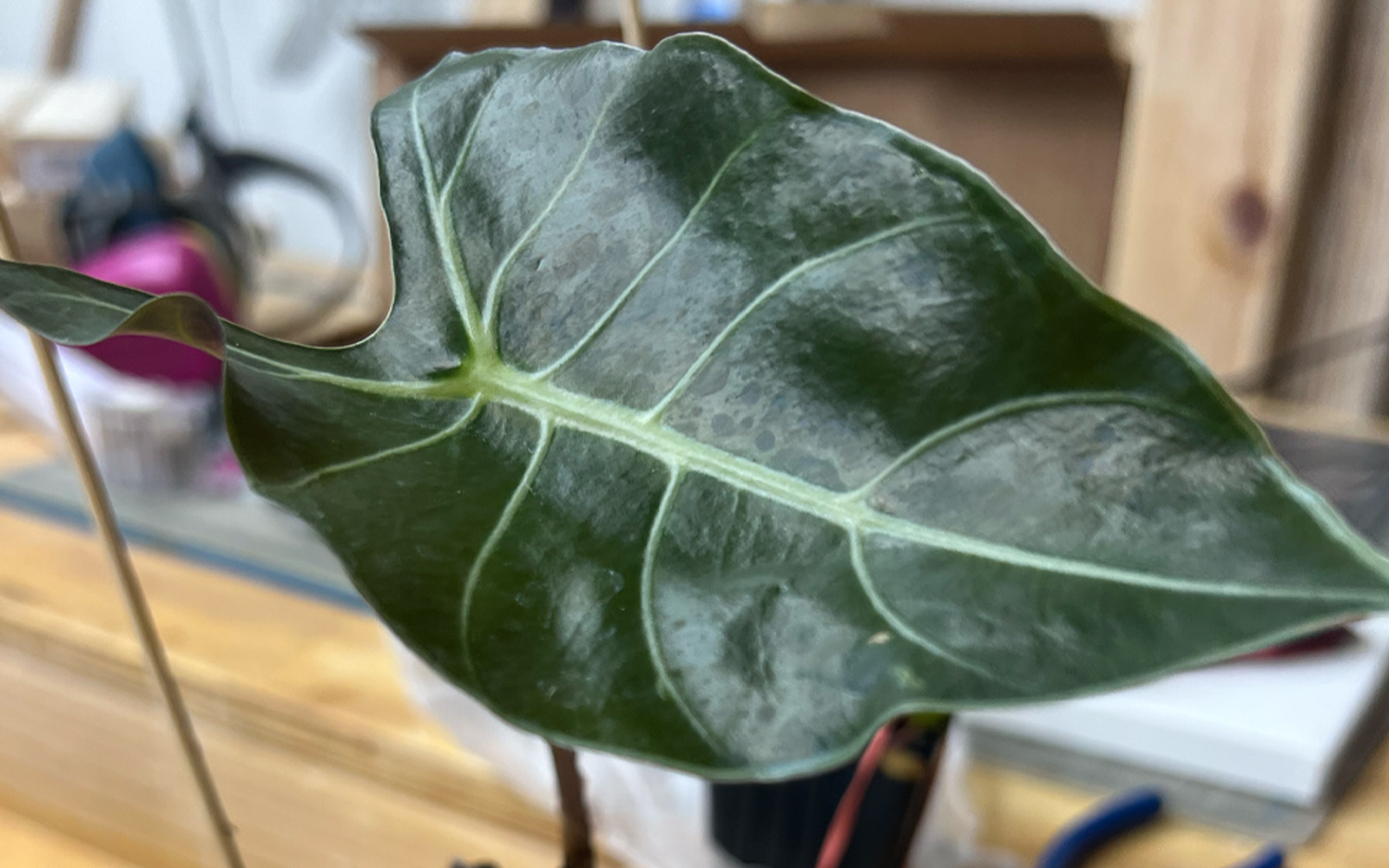
A closer look at the Dragon’s Tooth Alocasia growing in DC’s Indoor FlatScape. Explore its dramatic foliage, tropical root-zone needs, moisture balance, propagation, and the observations that come from growing it as part of a real living collection.
BOTANICAL RECORD
Species Record
Botanical identification: Alocasia ‘Dragon’s Tooth’
Common name: Dragon’s Tooth Alocasia
Family: Araceae
Native lineage: Tropical Southeast Asian Alocasia lineage
Growth habit: Upright tropical aroid
Growth characteristics: Elongated, sculptural leaves with pronounced venation and a distinctly textured surface. New leaves emerge from the central growth point and expand as the plant develops.
Identification status: Working cultivar identification pending label or specimen confirmation.
Collection status: Growing in DC’s Indoor FlatScape.
FROM DC’S COLLECTION
Specimen Notes
This record follows the Dragon’s Tooth Alocasia growing in DC’s Indoor FlatScape. General care information describes the plant’s tropical aroid requirements, while the observations below document what happens with this particular specimen.
What DC Is Learning
Alocasias make moisture balance especially visible. They want access to water, oxygen, warmth, and light at the same time, which makes the root zone just as important as the leaves above it.
Current observations: To be updated from the next documented Dragon’s Tooth check.
Record status: Living record. Care decisions and observations may change as the plant grows.
GROWING CONDITIONS
Care & Environment
Light
Dragon’s Tooth Alocasia generally performs well in bright, indirect light. Stronger light can support compact growth and healthy foliage, but abrupt exposure to intense direct sun may damage leaves. Increase light gradually when changing placement.
Temperature & Humidity
Warm, stable conditions are generally preferred. Protect the plant from cold drafts and prolonged chilling. Moderate to higher humidity can support healthy foliage, but good airflow and proper root-zone moisture remain important.
Leaf Development
New leaves emerge tightly folded and gradually expand. Leaf size, orientation, and texture can change as the plant matures and responds to light, nutrition, and root health.
Seasonal Growth
Growth may slow during cooler or darker periods. A temporary slowdown does not automatically mean the plant needs more fertilizer or water.
ROOT-ZONE CARE
Water & Nutrition
Watering
Keep the root zone moderately and consistently moist without leaving it waterlogged. Allow the upper portion of the substrate to begin drying before watering thoroughly, then allow excess water to drain.
Substrate
Use an airy, moisture-balanced tropical aroid mix that provides drainage while still holding enough water for steady growth. Coarse structure helps preserve oxygen around the roots.
Nutrition
During active growth, a balanced fertilizer can be used according to product directions and the plant’s response. Reduce feeding when growth slows, and avoid using fertilizer to compensate for poor light or stressed roots.
Container & Drainage
Use a container with reliable drainage and size it appropriately to the root system. An oversized pot can hold excess moisture around a relatively small root mass for too long.
PROPAGATION
Growing New Plants
Alocasias are most commonly propagated by separating offsets, corms, or naturally divided growth rather than by ordinary leaf or stem cuttings.
Offsets
Mature plants may produce smaller offsets around the base. These can be separated once they have developed enough roots and independent growth to support themselves.
Corms
Small corms may be found in the root zone during repotting. Healthy corms can be grown separately in a warm, moist, airy propagation environment until roots and leaves develop.
Separation
Use clean tools and minimize unnecessary root damage when separating offsets or corms from the parent plant.
After Propagation
Keep young plants warm, evenly moist, and in bright indirect light while their root systems establish. Avoid oversized containers and excessive fertilizer during early development.
OBSERVATION & TROUBLESHOOTING
What to Watch For
Yellowing Leaves
Yellowing can be associated with normal leaf turnover, excessive moisture, root stress, insufficient light, nutrient imbalance, or environmental changes. Review recent care before changing several variables at once.
Drooping Leaves
Drooping can result from water stress, root problems, temperature changes, transplant stress, or changing light conditions. Check the root zone before assuming the plant simply needs more water.
Brown Tips or Edges
Consider inconsistent moisture, dry air, fertilizer accumulation, mineral buildup, physical damage, or root stress. Look for patterns across multiple leaves.
Loss of Older Leaves
Alocasias may shed older leaves as new growth develops, particularly after environmental changes. Evaluate the overall plant and new growth rather than judging health from a single aging leaf.
Pest Inspection
Inspect leaf undersides, petioles, stems, and new growth for spider mites, thrips, scale, or other pests. Fine webbing, stippling, distorted growth, or silvery damage should be investigated promptly.
Safety
Alocasia tissues contain calcium oxalate crystals that can irritate the mouth and digestive tract if chewed or swallowed. Keep the plant away from pets and children who may chew foliage.
THE LIVING RECORD
DC’s Field Record
This record follows the actual Dragon’s Tooth Alocasia growing in DC’s Indoor FlatScape. It will document new leaves, root development, watering response, propagation, environmental changes, and the lessons that come from observing the plant over time.
Current Specimen
Collection: DC’s Indoor FlatScape
Identification: Alocasia ‘Dragon’s Tooth’ — working ID
Root-zone approach: Moisture-balanced, aerated tropical aroid root zone
Current measurements: Not yet entered.
Latest observation: To be updated from the next documented Dragon’s Tooth check.
What DC Is Learning
This space will record what the plant actually does: new leaf emergence, leaf size, root behavior, corm development, changes in watering, and responses to light and humidity. Observations will be dated so they remain useful as the plant changes.
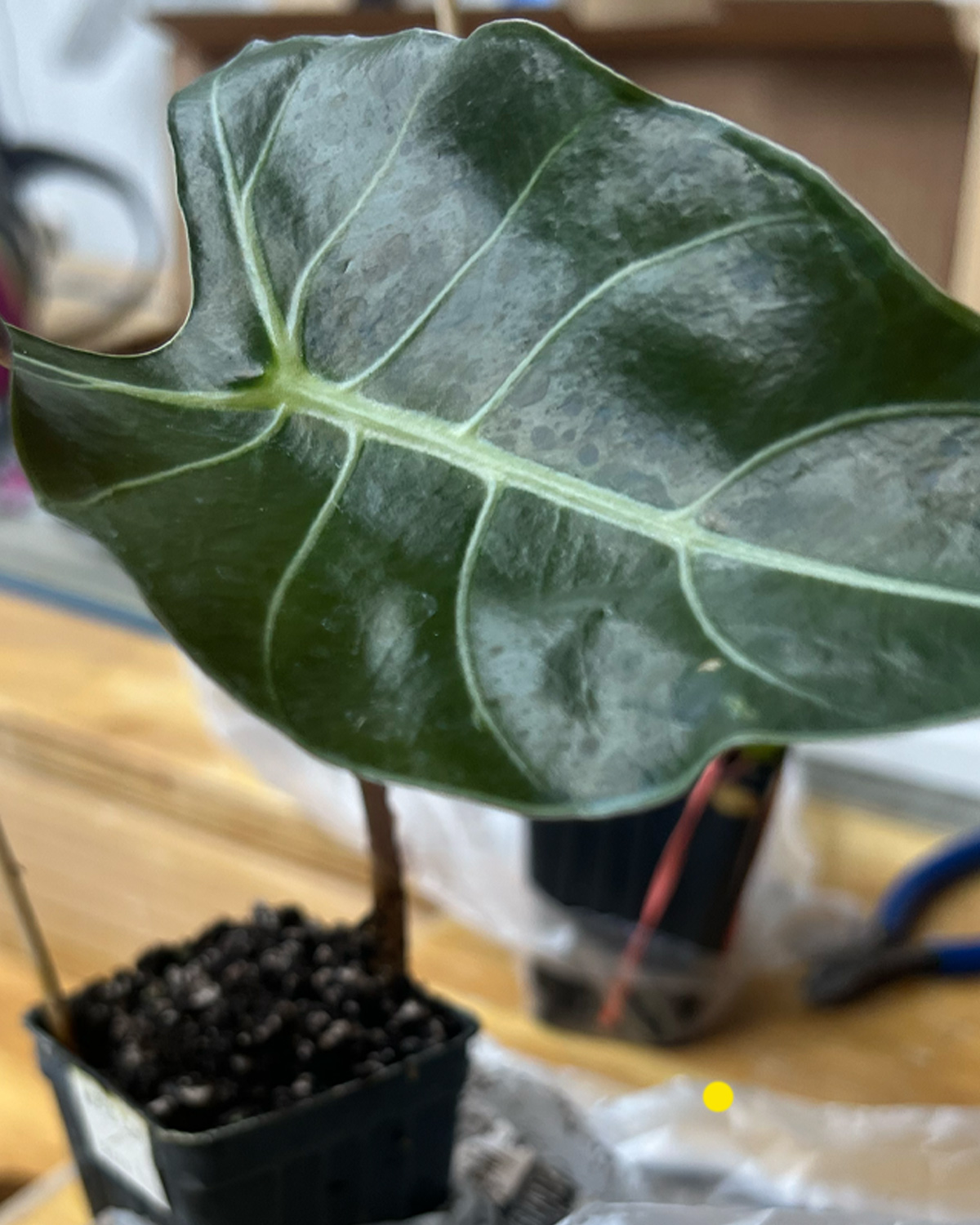
Field photograph · DC’s Indoor FlatScape
Additional photographs and dated observations will be added as the specimen develops.
THE REFERENCE LIBRARY
Keep the Field Guide
The website dossier is the living reference. The downloadable edition will bring the care information together with expanded procedures, root-zone guidance, corm propagation techniques, troubleshooting references, and space for personal notes.
Dragon’s Tooth Alocasia Care Guide: Edition in preparation.
As the collection grows, this dossier will continue to be updated with new photographs, observations, and related field notes.