
THE LIVING COLLECTION / SPECIES DOSSIER
Ghost Plant
Graptopetalum paraguayense
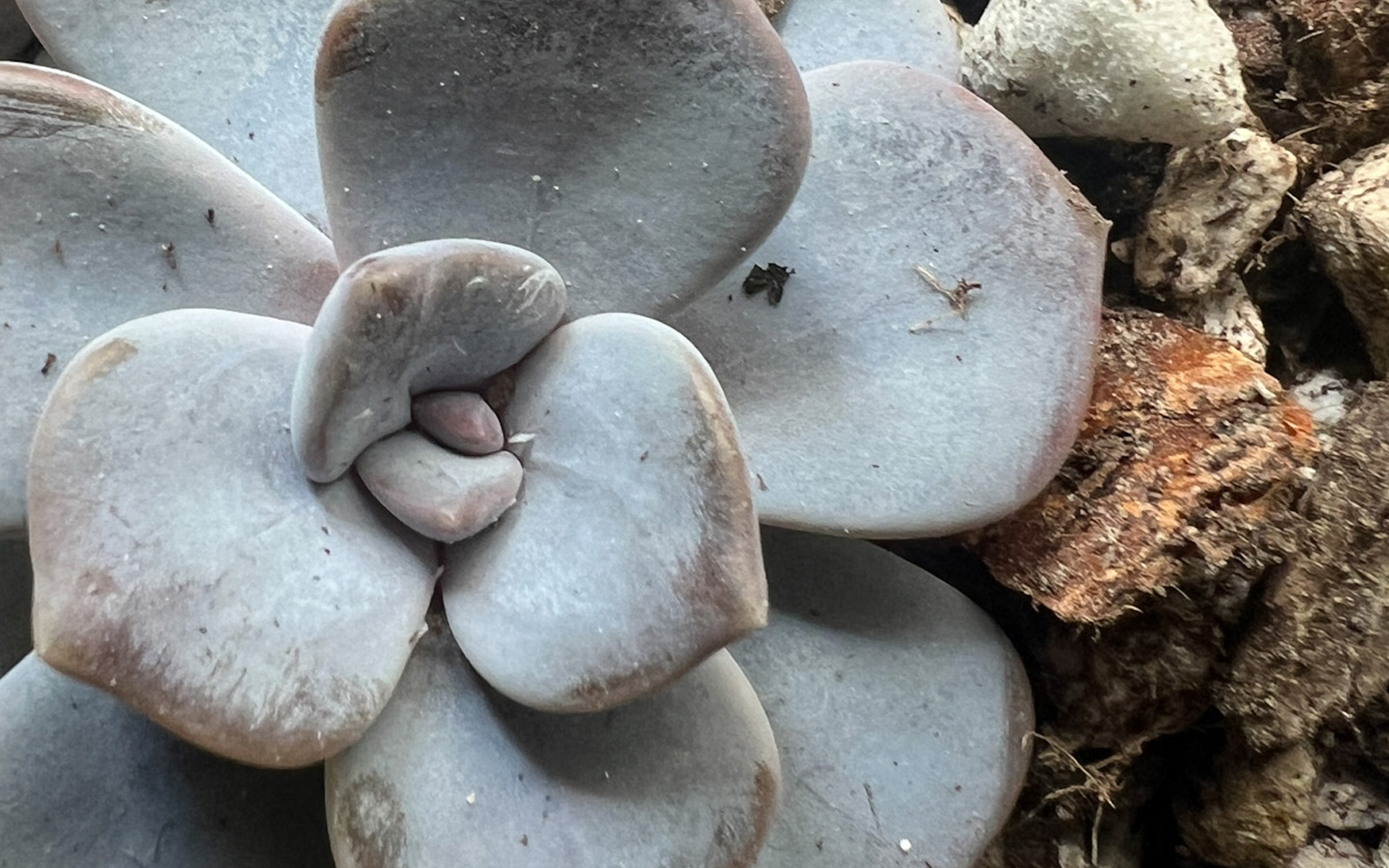
A closer look at the Ghost Plant growing in DC’s Indoor FlatScape. Explore its powdery rosettes, drought-tolerant growth strategy, dryland root zone, propagation, and the observations that come from growing it as part of a real living collection.
BOTANICAL RECORD
Species Record
Botanical identification: Graptopetalum paraguayense — working ID
Common name: Ghost Plant
Family: Crassulaceae
Native range: Mexico
Growth habit: Rosette-forming succulent perennial
Growth characteristics: Thick fleshy leaves form loose rosettes that may develop on elongating stems. Foliage can appear gray-green, blue-green, or softly pink depending on light, temperature, and growing conditions. A powdery surface coating may give the plant its ghostly appearance.
Identification status: Working species identification pending specimen confirmation.
Collection status: Growing in DC’s Indoor FlatScape.
FROM DC’S COLLECTION
Specimen Notes
This record follows the Ghost Plant growing in DC’s Indoor FlatScape. General care information describes the working species identification, while the observations below document what happens with this particular specimen.
What DC Is Learning
The Ghost Plant makes water storage visible. Its thick leaves, compact rosettes, and dryland growth strategy make it a good contrast to the FlatScape’s moisture-loving tropicals.
Current observations: To be updated from the next documented Ghost Plant check.
Record status: Living record. Identification and care decisions may change as the plant develops and additional information becomes available.
GROWING CONDITIONS
Care & Environment
Light
Ghost Plants generally perform best in strong light. Bright indirect light and appropriately introduced direct sun can support compact rosette growth and stronger coloration. Sudden exposure to intense sun can cause stress or leaf damage.
Temperature & Humidity
Warm indoor conditions are generally suitable. Protect the plant from prolonged cold and especially from cold, wet root conditions. Average household humidity is usually sufficient.
Growth Habit
Rosettes may remain compact at first and later develop on lengthening stems. Older stems can create a trailing or cascading form as the plant matures.
Farina
The leaves may carry a powdery protective coating known as farina. Avoid unnecessary rubbing or wiping because fingerprints and handling can permanently remove this coating from affected areas.
ROOT-ZONE CARE
Water & Nutrition
Watering
Allow the root zone to dry substantially between waterings. When watering is needed, saturate the substrate thoroughly and allow excess water to drain. Avoid keeping the root zone continuously damp.
Substrate
Use a fast-draining, highly aerated dryland medium. Mineral components and coarse structure help prevent the substrate from remaining wet for extended periods.
Nutrition
Feed lightly during active growth with an appropriate balanced fertilizer. Ghost Plants do not require aggressive feeding, and excess fertilizer should not be used to force faster growth.
Container & Drainage
Use a container with reliable drainage and size it appropriately to the root system. Excess substrate around a modest root mass can hold moisture much longer than expected.
PROPAGATION
Growing New Plants
Ghost Plants can be propagated from leaves, stem cuttings, offsets, or separated rosettes.
Leaf Propagation
Select a healthy mature leaf and remove it cleanly from the stem. A complete leaf base is important for successful propagation.
Callusing
Allow fresh leaf or stem wounds to dry and callus before placing propagation material into prolonged contact with moisture.
Stem Cuttings
Long or bare stems can be cut and re-rooted. Allow the cut end to dry before placing the stem into a fast-draining propagation medium.
Offsets & Rosettes
Established plants may produce offsets or additional rosettes that can be separated once they are large enough to establish independently.
After Rooting
Move rooted propagations into appropriately sized containers with a dryland mix and avoid keeping developing roots continuously wet.
OBSERVATION & TROUBLESHOOTING
What to Watch For
Soft or Translucent Leaves
Soft, collapsing, or translucent tissue can be associated with prolonged excess moisture, cold damage, or root problems. Check the root zone before adding more water.
Wrinkled Leaves
Wrinkling can develop after extended dryness, but damaged roots can create a similar appearance by limiting water uptake. Consider both substrate moisture and root condition.
Stretching
Long stems, wide spacing, and loose rosettes can indicate insufficient light. Compare new growth with older growth and review the plant’s placement.
Color Changes
Foliage color may shift with light, temperature, and other environmental conditions. Pale gray-green, pink, or lavender tones can occur without automatically indicating a problem.
Leaf Drop
Older leaves may dry and fall naturally from lower portions of the stem. Widespread soft leaf drop should prompt a review of root-zone moisture and temperature.
Pest Inspection
Inspect leaf joints, rosette centers, stem bases, and the soil line for mealybugs, scale, or other pests. Identify the problem before selecting a treatment.
THE LIVING RECORD
DC’s Field Record
This record follows the actual Ghost Plant growing in DC’s Indoor FlatScape. It will document rosette development, stem growth, leaf propagation, root behavior, watering response, coloration, environmental changes, and the lessons that come from observing the plant over time.
Current Specimen
Collection: DC’s Indoor FlatScape
Identification: Graptopetalum paraguayense — working ID
Root-zone approach: DC’s Dryland Mineral Root Architecture Mix
Current measurements: Not yet entered.
Latest observation: To be updated from the next documented Ghost Plant check.
What DC Is Learning
This space will record what the plant actually does: rosette development, stem extension, coloration, leaf firmness, propagation success, root behavior, watering response, and changes associated with light. Observations will be dated so they remain useful as the specimen develops.
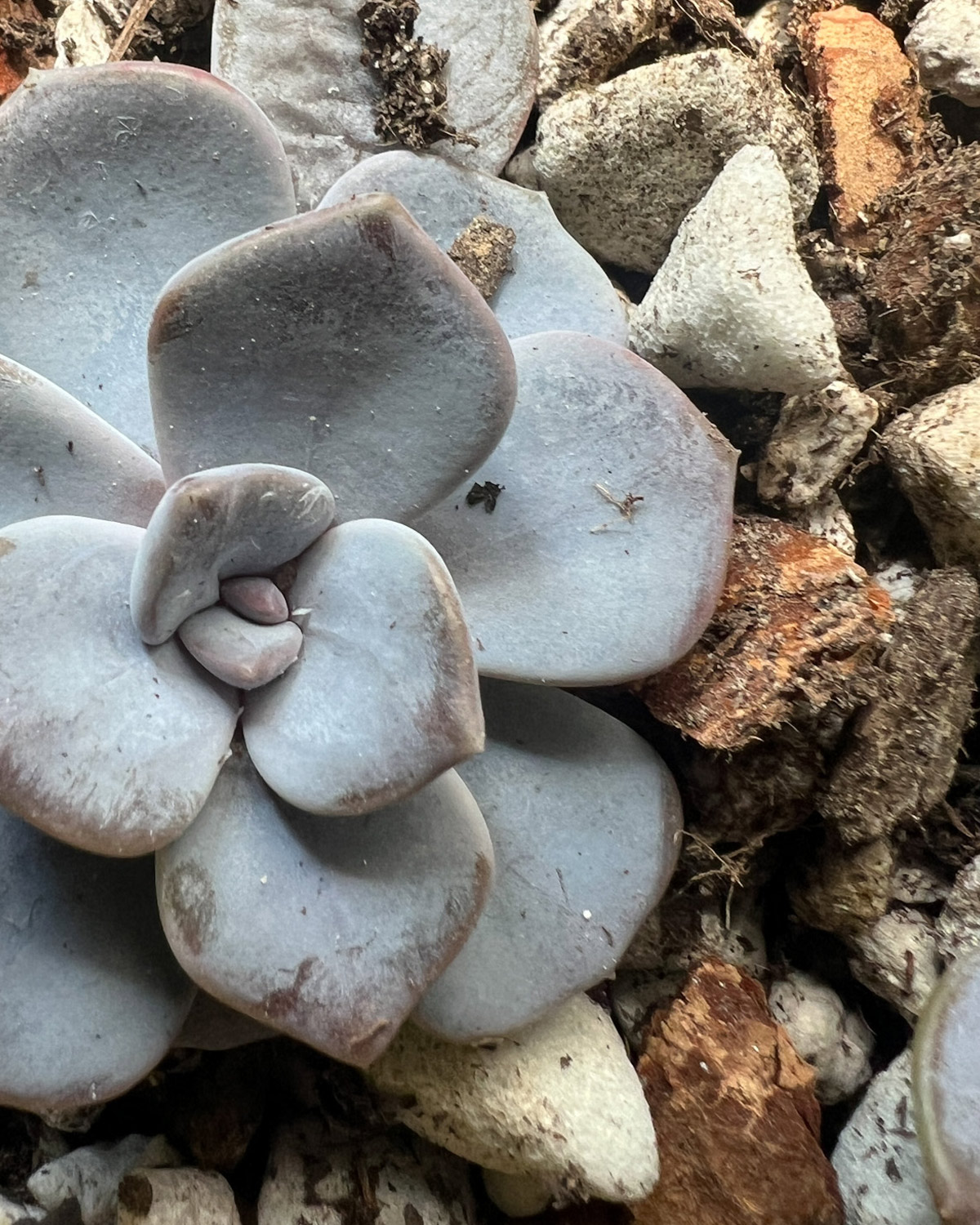
Field photograph · DC’s Indoor FlatScape
Additional photographs and dated observations will be added as the specimen develops.
THE REFERENCE LIBRARY
Keep the Field Guide
The website dossier is the living reference. The downloadable edition will bring the care information together with expanded procedures, dryland root-zone guidance, leaf and stem propagation techniques, troubleshooting references, and space for personal notes.
Ghost Plant Care Guide: Edition in preparation.
As the collection grows, this dossier will continue to be updated with new photographs, observations, and related field notes.