
THE LIVING COLLECTION / SPECIES DOSSIER
Cape Sundew
Drosera capensis
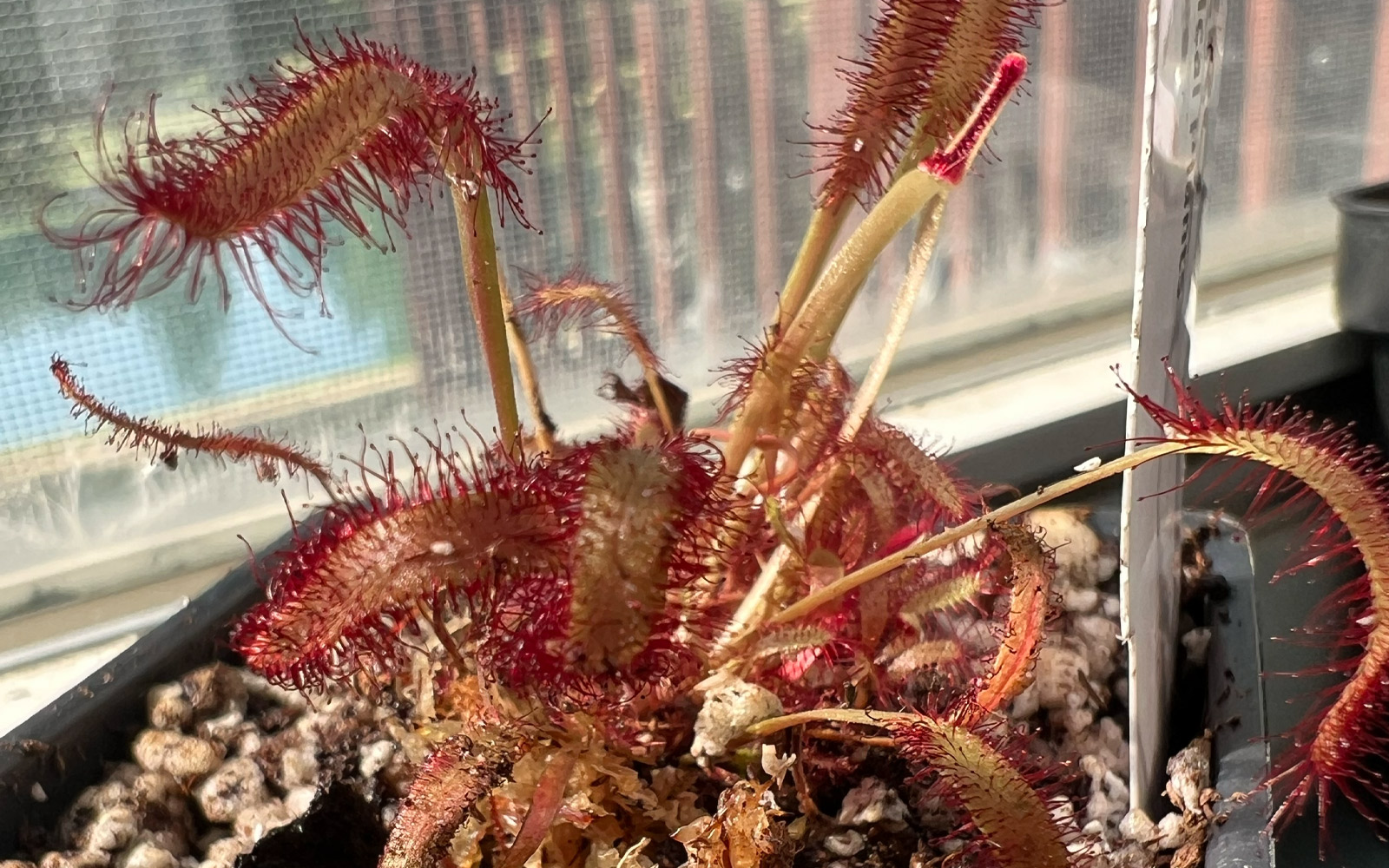
A closer look at the Cape Sundew growing in DC’s Indoor FlatScape. Explore its specialized root-zone needs, carnivorous biology, propagation, and the observations that come from growing it in a real living collection.
BOTANICAL RECORD
Species Record
Botanical name: Drosera capensis
Common name: Cape Sundew
Family: Droseraceae
Native range: South Africa, particularly the Cape region
Growth habit: Perennial carnivorous herb
Growth characteristics: Long, narrow leaves covered with glandular tentacles that produce sticky mucilage. The leaves capture small prey, and the plant can curl its leaves around captured insects.
Collection status: Growing in DC’s Indoor FlatScape.
FROM DC’S COLLECTION
Specimen Notes
This record follows the Cape Sundew growing in DC’s Indoor FlatScape. General care information describes the species, while the observations below document what happens with this particular plant.
What DC Is Learning
The introductory FlatScape article describes the carnivorous collection as its own little world. These plants require specialized root environments because their needs differ from the general tropical and succulent mixes.
Current observations: To be updated from the next documented Cape Sundew check.
Record status: Living record. Care decisions and observations may change as the plant grows.
GROWING CONDITIONS
Care & Environment
Light
Cape Sundews grow best with abundant light. Bright indoor light or suitable supplemental grow lighting can support healthy growth and mucilage production. Introduce stronger light gradually and watch for signs of stress.
Temperature & Humidity
Normal warm indoor conditions are generally suitable. Protect the plant from freezing temperatures and extreme heat. Good light and appropriate root-zone moisture are more important than trying to maintain excessively high humidity.
Carnivorous Biology
The sticky tentacles capture small insects, which provide nutrients that are scarce in the plant’s natural root environment. The plant still relies on photosynthesis for its energy. It does not need to be fed meat or household food.
ROOT-ZONE CARE
Water & Nutrition
Watering
Keep the substrate consistently moist. Unlike Monstera, Cape Sundew should not be allowed to dry out between waterings. A shallow tray of suitable water is a common way to maintain moisture, provided the pot and root zone remain healthy.
Water Quality
Use low-mineral water such as reverse-osmosis, distilled, or suitable rainwater. Avoid assuming ordinary tap water is safe, because dissolved minerals can accumulate in the substrate.
Substrate
Use a nutrient-poor carnivorous-plant medium, such as unfertilized sphagnum peat with plain perlite, or another suitable low-nutrient mix. Avoid ordinary fertilized potting soil, compost, limestone, and fertilizer-enriched additives.
Nutrition
Do not apply ordinary houseplant fertilizer to the root zone. Cape Sundew is adapted to nutrient-poor conditions and can obtain supplemental nutrients from captured prey. If supplemental feeding is considered, use an appropriate carnivorous-plant method rather than household food.
Container & Drainage
Use a suitable container with drainage that allows the substrate to remain moist without introducing unwanted minerals or fertilizer residues.
PROPAGATION
Growing New Plants
Cape Sundew can be propagated by seed and, under suitable conditions, by leaf or root cuttings. The best method depends on the condition of the plant and the material available.
Seed
Seeds can be sown on the surface of a suitable moist, nutrient-poor medium. Provide appropriate light and moisture, and avoid burying the fine seed deeply.
Leaf Cuttings
Healthy leaves may produce new plantlets when placed in suitable low-mineral water or on an appropriate moist propagation medium. Keep the material clean and monitor it for new growth.
Root Cuttings
Cape Sundew can also produce new plants from suitable root sections. This method is best attempted when the plant is healthy and root material is available without unnecessarily disturbing the specimen.
After Propagation
Move established plantlets into an appropriately sized container with suitable carnivorous-plant substrate. Keep the root zone moist and introduce stronger light gradually.
OBSERVATION & TROUBLESHOOTING
What to Watch For
Loss of Mucilage
Reduced dew production can be associated with insufficient light, recent environmental changes, water stress, or other growing-condition problems. Review the conditions before assuming the plant needs feeding.
Brown or Dying Leaves
Older leaves naturally decline, but widespread browning may indicate stress. Check water quality, substrate moisture, light exposure, and recent changes.
Slow Growth
Review light, temperature, root-zone conditions, and the plant’s recent history. Avoid responding automatically with fertilizer.
Pest Inspection
Inspect new growth and leaf surfaces for pests. Identify the problem before choosing a treatment, and avoid applying ordinary houseplant sprays or oils without confirming they are suitable for carnivorous plants.
Safety
Do not treat the plant as food or medicine. Keep fertilizers, pesticides, and other plant treatments away from the household aquarium and sensitive aquatic organisms.
THE LIVING RECORD
DC’s Field Record
This record follows the actual Cape Sundew growing in DC’s Indoor FlatScape. It will document new growth, trap development, propagation, changes in growing conditions, and the lessons that come from observing the plant over time.
Current Specimen
Collection: DC’s Indoor FlatScape
Identification: Drosera capensis
Root-zone approach: Specialized nutrient-poor carnivorous-plant medium
Water source: RO water, as documented in the introductory FlatScape article.
Current measurements: Not yet entered.
Latest observation: To be updated from the next documented plant check.
What DC Is Learning
This space will record what the plant actually does: new leaves, mucilage production, captured prey, root development, propagation attempts, and responses to changes in light or water. Observations will be dated so they remain useful as the plant changes.
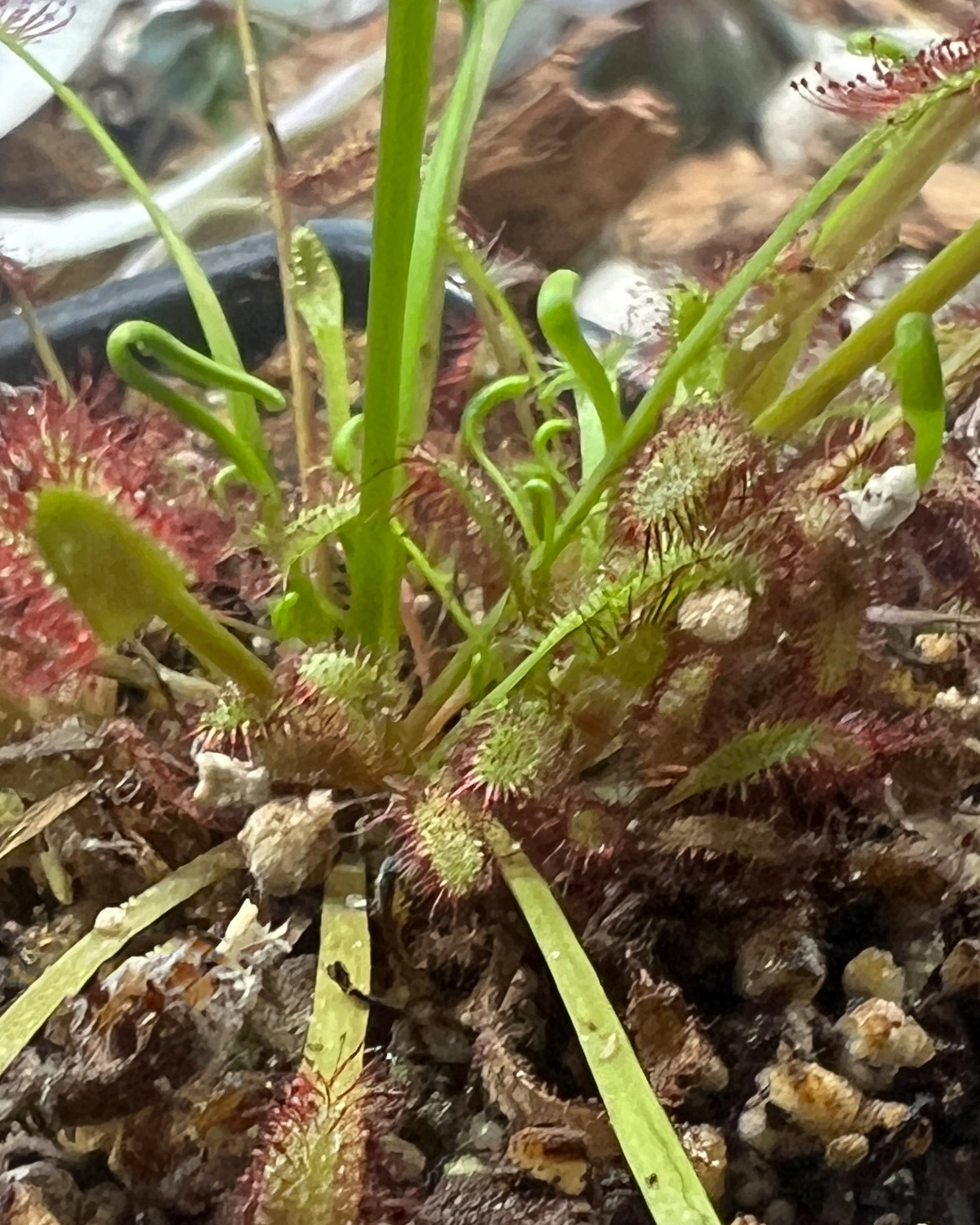
Field photograph · DC’s Indoor FlatScape
Additional photographs and dated observations will be added as the specimen develops.
THE REFERENCE LIBRARY
Keep the Field Guide
The website dossier is the living reference. The downloadable edition will bring the care information together with expanded procedures, propagation guidance, troubleshooting references, and space for personal notes.
Cape Sundew Care Guide: Edition in preparation.
As the collection grows, this dossier will continue to be updated with new photographs, observations, and related field notes.