
THE LIVING COLLECTION / SPECIES DOSSIER
Dwarf Umbrella Tree
Heptapleurum arboricola
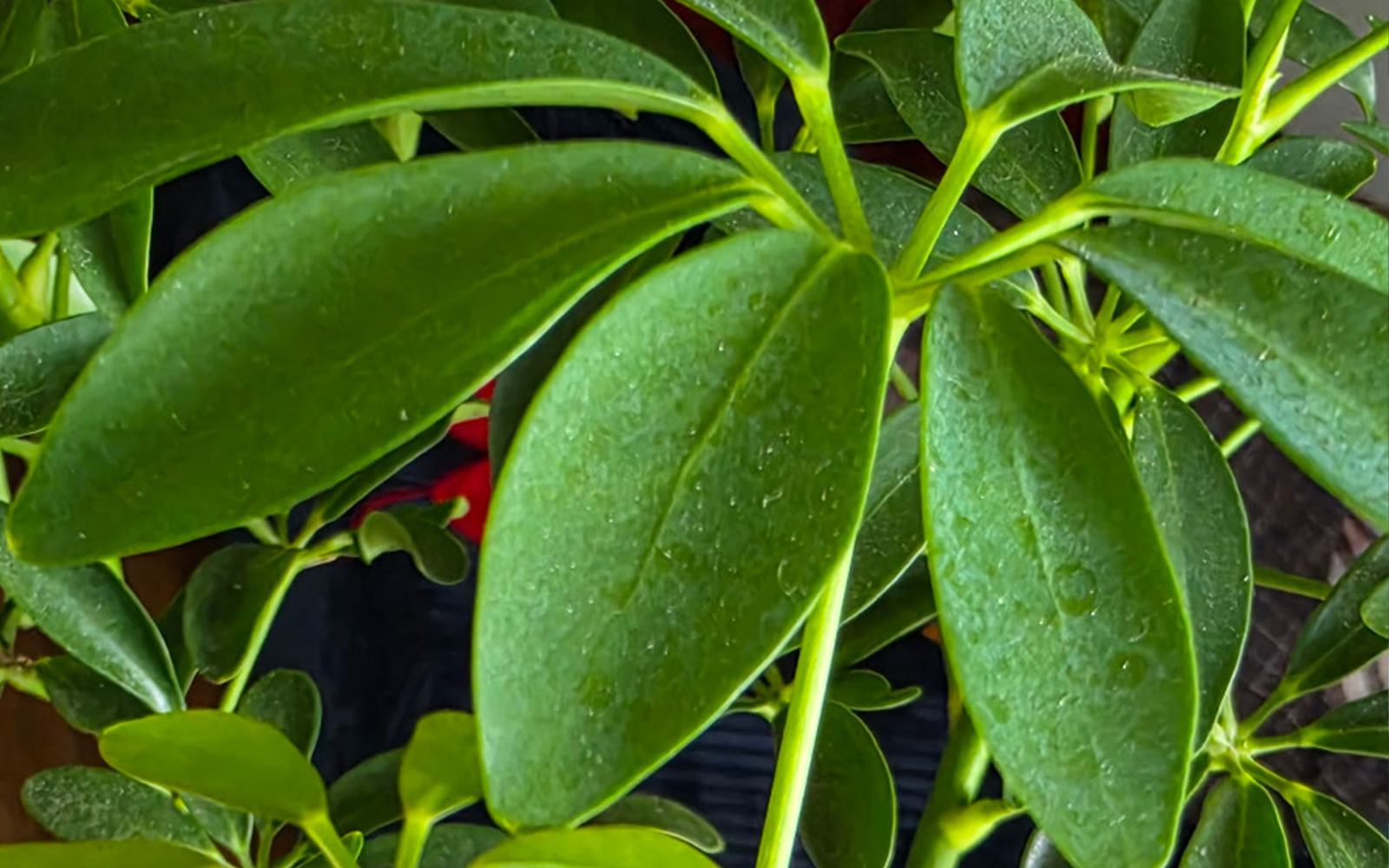
A closer look at the Dwarf Umbrella Tree growing in DC’s Indoor FlatScape. Explore its branching growth habit, tropical root-zone needs, pruning response, propagation, and the observations that come from growing it as part of a real living collection.
BOTANICAL RECORD
Species Record
Botanical name: Heptapleurum arboricola
Common name: Dwarf Umbrella Tree
Also commonly sold as: Schefflera arboricola
Family: Araliaceae
Native range: Taiwan and Hainan
Growth habit: Evergreen tropical shrub or small tree
Growth characteristics: Palmately compound leaves radiate from a central point, creating the umbrella-like form that gives the plant its common name. Indoors, branching and overall size can be shaped through pruning, available light, and container management.
Collection status: Growing in DC’s Indoor FlatScape.
FROM DC’S COLLECTION
Specimen Notes
This record follows the Dwarf Umbrella Tree growing in DC’s Indoor FlatScape. General care information describes the species, while the observations below document what happens with this particular plant.
What DC Is Learning
The Dwarf Umbrella Tree brings a woody, branching growth form into a collection filled with vines, rosettes, carnivorous plants, and broad-leaved tropicals. Its structure makes pruning, canopy development, and light distribution part of the experiment.
Current observations: To be updated from the next documented Dwarf Umbrella Tree check.
Record status: Living record. Care decisions and observations may change as the plant grows.
GROWING CONDITIONS
Care & Environment
Light
Dwarf Umbrella Trees generally grow best in bright, indirect light. They can tolerate moderate indoor light, but stronger appropriate light usually supports denser branching and more compact growth. Variegated forms may require more light to maintain strong coloration.
Temperature & Humidity
Warm indoor temperatures are generally suitable. Protect the plant from cold drafts and prolonged chilling. Average household humidity can work well, although stable environmental conditions help reduce stress.
Growth & Pruning
Pruning can be used to control height, encourage branching, and shape the canopy. Cuts made above a node may encourage new growth below the pruning point. Use clean tools and avoid removing excessive foliage from a stressed plant.
Rotation
Plants growing near a window may lean toward the strongest light source. Rotating the container periodically can encourage more balanced growth, although major changes in orientation should still be observed for plant response.
ROOT-ZONE CARE
Water & Nutrition
Watering
Water according to the condition of the root zone rather than a fixed calendar. Allow the upper portion of the substrate to begin drying before watering thoroughly, then allow excess water to drain.
Substrate
Use a moisture-balanced, aerated tropical medium that drains reliably while retaining enough moisture to support steady growth. Avoid keeping the root zone continuously saturated.
Nutrition
During active growth, a balanced houseplant fertilizer can be used according to product directions and the plant’s response. Reduce feeding when growth slows or available light decreases.
Container & Drainage
Use a container with adequate drainage and size it appropriately to the existing root system. Excess substrate around a small root mass can stay wet significantly longer than expected.
PROPAGATION
Growing New Plants
Dwarf Umbrella Trees can be propagated from healthy stem cuttings. Success depends on healthy plant material, warmth, moisture, and an aerated rooting environment.
Stem Cuttings
Select a healthy stem section containing viable nodes and make the cut with a clean tool. Remove lower leaves that would otherwise remain buried or submerged during propagation.
Rooting
Place the cutting into a suitable moist propagation medium or another appropriate rooting environment. Provide warmth, bright indirect light, and consistent moisture without keeping the cutting waterlogged.
After Rooting
Once a useful root system develops, move the cutting into an appropriately sized container with suitable tropical substrate. Allow the new roots time to establish before making additional major changes.
Shaping Young Plants
Once established, selective pruning can encourage branching and help shape a fuller young plant over time.
OBSERVATION & TROUBLESHOOTING
What to Watch For
Yellowing Leaves
Yellowing may be associated with normal leaf aging, excessive moisture, root stress, insufficient light, or environmental changes. Review the recent care history before changing several variables at once.
Leaf Drop
Dwarf Umbrella Trees may shed leaves after sudden changes in light, temperature, watering, or location. Consider recent environmental changes when evaluating leaf loss.
Leggy Growth
Long internodes and sparse branching may indicate limited light. Compare the newest growth with older sections and review the plant’s position relative to the available light source.
Brown Tips or Edges
Consider inconsistent moisture, dry air, mineral accumulation, root stress, or physical damage. Look for patterns across the plant rather than diagnosing from a single damaged leaflet.
Pest Inspection
Inspect leaf undersides, petioles, stems, branch junctions, and new growth for scale, spider mites, mealybugs, webbing, or sticky residue. Identify the problem before choosing a treatment.
Safety
Dwarf Umbrella Tree foliage contains compounds that can cause irritation if chewed or swallowed. Keep the plant away from pets and children who may chew foliage.
THE LIVING RECORD
DC’s Field Record
This record follows the actual Dwarf Umbrella Tree growing in DC’s Indoor FlatScape. It will document branching, leaf development, pruning response, root growth, environmental changes, and the lessons that come from observing the plant over time.
Current Specimen
Collection: DC’s Indoor FlatScape
Identification: Heptapleurum arboricola
Root-zone approach: Moisture-balanced, aerated tropical root zone
Current measurements: Not yet entered.
Latest observation: To be updated from the next documented Dwarf Umbrella Tree check.
What DC Is Learning
This space will record what the plant actually does: new branching, leaf development, pruning response, root behavior, changes in watering, and responses to light. Observations will be dated so they remain useful as the plant changes.
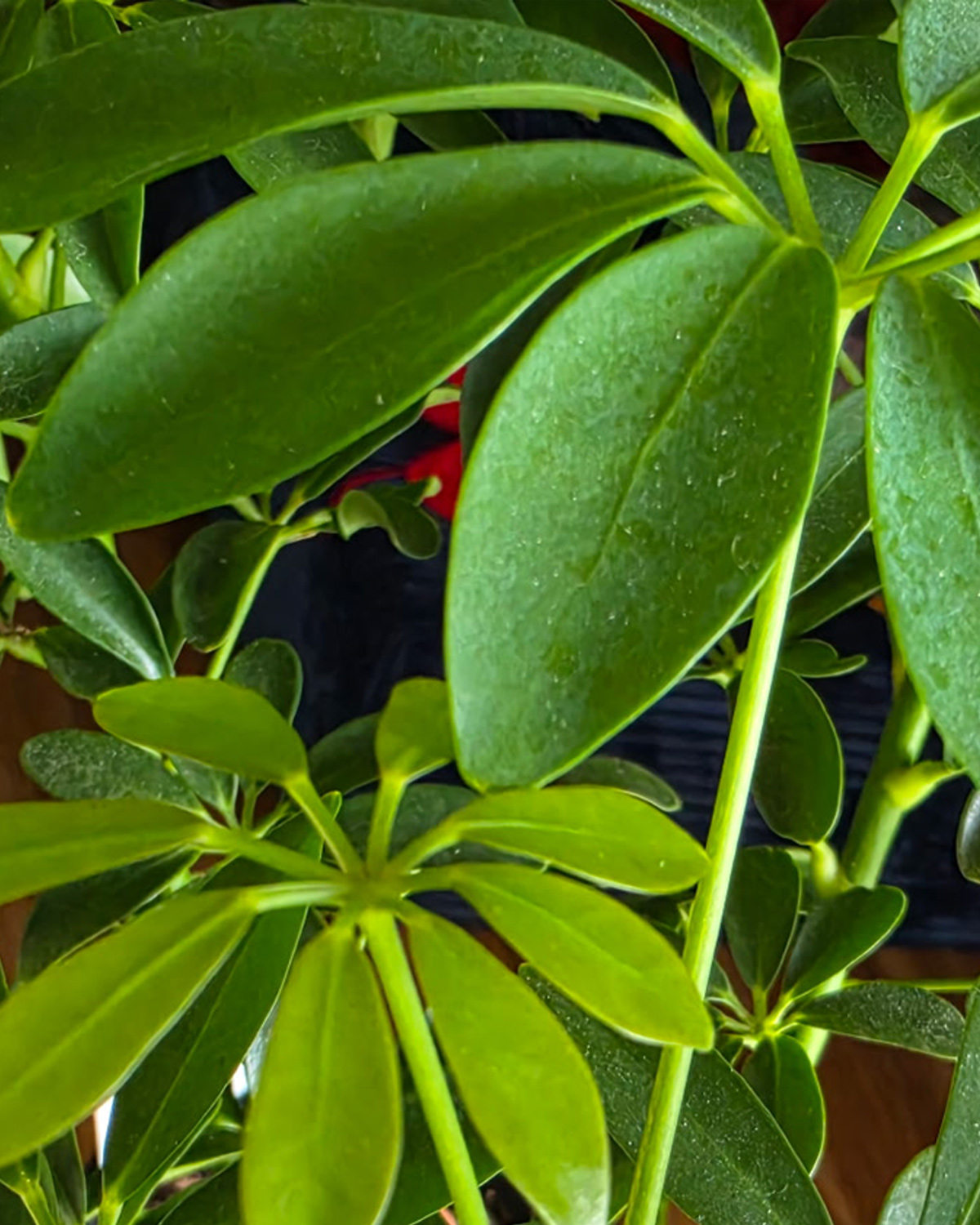
Field photograph · DC’s Indoor FlatScape
Additional photographs and dated observations will be added as the specimen develops.
THE REFERENCE LIBRARY
Keep the Field Guide
The website dossier is the living reference. The downloadable edition will bring the care information together with expanded procedures, pruning guidance, propagation techniques, troubleshooting references, and space for personal notes.
Dwarf Umbrella Tree Care Guide: Edition in preparation.
As the collection grows, this dossier will continue to be updated with new photographs, observations, and related field notes.