
THE LIVING COLLECTION / SPECIES DOSSIER
Venus Flytrap
Dionaea muscipula
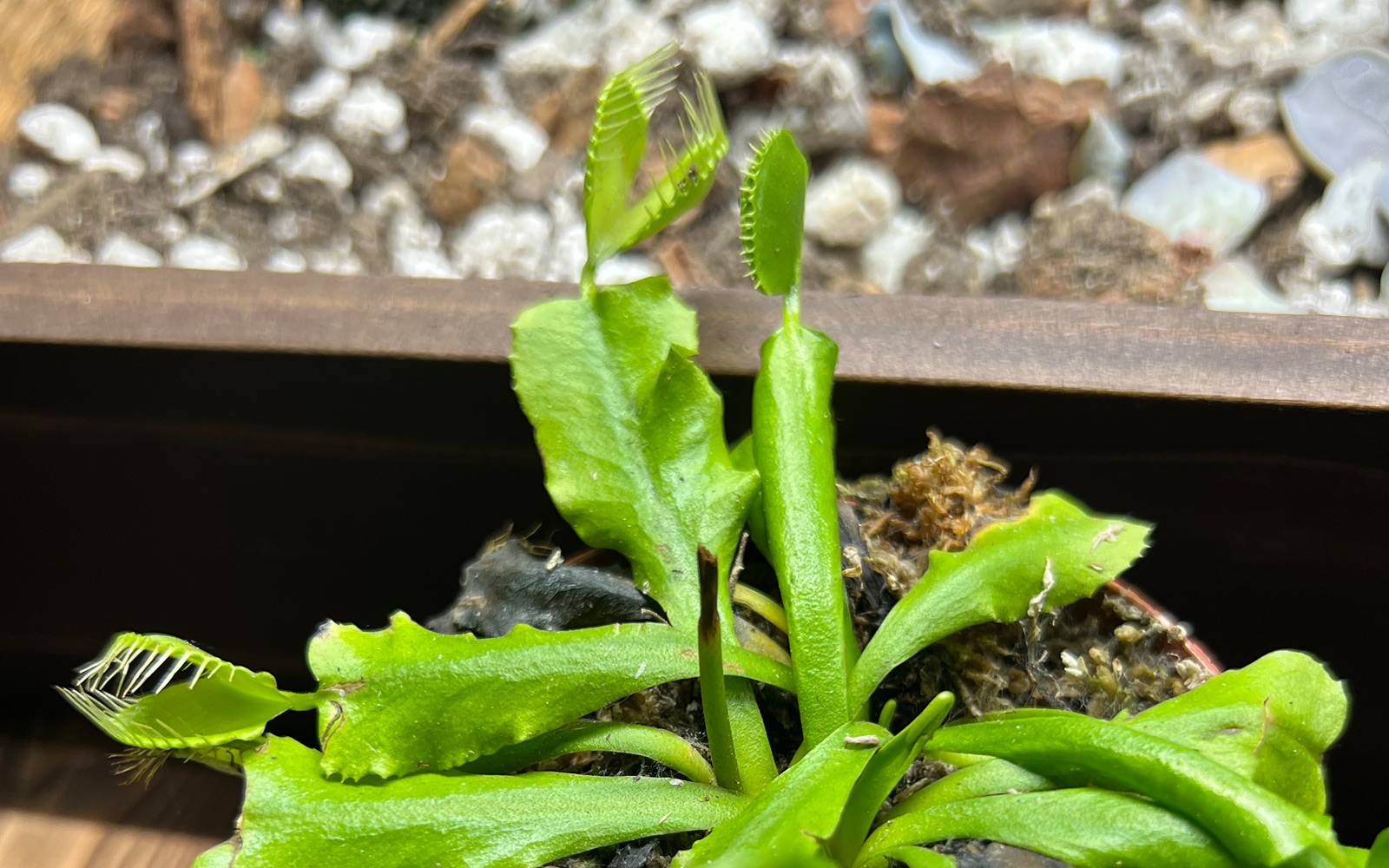
A closer look at the Venus Flytrap growing in DC’s Indoor FlatScape. Explore its specialized root-zone needs, trapping biology, seasonal dormancy, propagation, and the observations that come from growing it in a real living collection.
BOTANICAL RECORD
Species Record
Botanical name: Dionaea muscipula
Common name: Venus Flytrap
Family: Droseraceae
Native range: Coastal plain of North and South Carolina
Growth habit: Perennial carnivorous herb
Growth characteristics: Modified leaves form hinged traps lined with trigger hairs. When stimulated appropriately, the lobes close around suitable prey and begin the digestive process.
Collection status: Growing in DC’s Indoor FlatScape.
FROM DC’S COLLECTION
Specimen Notes
This record follows the Venus Flytrap growing in DC’s Indoor FlatScape. General care information describes the species, while the observations below document what happens with this particular plant.
What DC Is Learning
The Venus Flytrap brings one of DC’s earliest plant fascinations full circle. As a kid, DC lost more than a few after being told to feed one hamburger. The lesson stuck: carnivorous plants need to be understood on their own terms.
Current observations: To be updated from the next documented Venus Flytrap check.
Record status: Living record. Care decisions and observations may change as the plant grows.
GROWING CONDITIONS
Care & Environment
Light
Venus Flytraps require strong light. Several hours of direct sun or appropriately intense supplemental grow lighting can support compact growth, healthy traps, and strong coloration. Plants moved into stronger light should be acclimated gradually.
Temperature
Warm growing-season temperatures are generally suitable, but Venus Flytraps are temperate plants rather than tropical houseplants. Seasonal temperature changes are part of their natural growth cycle.
Seasonal Dormancy
Venus Flytraps normally experience a winter dormancy period. Growth slows, older traps may die back, and the plant can appear less vigorous. Dormancy is part of the species’ annual cycle rather than automatically a sign that the plant is dying.
Trap Biology
Each trap is a modified leaf. Trigger hairs help the plant distinguish suitable movement before the trap fully closes. Repeatedly triggering traps for entertainment uses the plant’s energy and should be avoided.
ROOT-ZONE CARE
Water & Nutrition
Watering
Keep the substrate consistently moist during active growth. A shallow tray of suitable water is commonly used to maintain moisture. Do not allow the root zone to dry completely.
Water Quality
Use low-mineral water such as reverse-osmosis, distilled, or suitable rainwater. Mineral accumulation from unsuitable water can damage carnivorous plants over time.
Substrate
Use a nutrient-poor carnivorous-plant medium such as unfertilized sphagnum peat with plain perlite, or another suitable low-nutrient mix. Avoid ordinary potting soil, compost, limestone, slow-release fertilizer, and fertilizer-enriched amendments.
Nutrition
Do not fertilize the root zone with ordinary houseplant fertilizer. The plant can obtain supplemental nutrients from captured insects. It does not need hamburger, processed meat, or household food.
Container & Drainage
Use a suitable container with drainage and enough depth for the root system. Avoid containers or residues that may introduce unwanted minerals into the substrate.
PROPAGATION
Growing New Plants
Venus Flytraps can be propagated by seed, division, and certain vegetative methods. The best approach depends on the health and maturity of the plant.
Division
Mature plants may produce additional growth points or offsets. These can sometimes be separated during repotting when each division has adequate roots.
Seed
Fresh seed can be sown on the surface of a suitable moist, nutrient-poor medium. Provide strong light, suitable temperatures, and consistent moisture. Seed-grown plants require patience and take several years to reach mature size.
Leaf Pullings
Healthy leaf material that includes the pale basal tissue may sometimes produce plantlets when placed on a suitable moist carnivorous-plant medium.
After Propagation
Keep young plants in appropriate low-mineral water and nutrient-poor substrate. Avoid rushing fertilizer or repeatedly disturbing developing roots.
OBSERVATION & TROUBLESHOOTING
What to Watch For
Blackening Traps
Individual traps naturally age and eventually turn black. Widespread decline, however, should prompt a review of water quality, light, substrate conditions, temperature, and seasonal dormancy.
Weak or Small Traps
Insufficient light is a common factor in weak growth. Review light intensity and seasonal conditions before assuming the plant needs feeding.
No Trap Coloration
Trap coloration varies with genetics, light intensity, and growing conditions. Color alone should not be used as the only measure of plant health.
Root or Crown Problems
Avoid compacted, nutrient-rich, or stagnant substrate. Check for unpleasant odors, persistent decline, or soft tissue around the crown if root-zone problems are suspected.
Pest Inspection
Inspect new growth and trap surfaces for pests. Identify the problem before choosing a treatment, and avoid ordinary oils or sprays unless they are known to be appropriate for carnivorous plants.
THE LIVING RECORD
DC’s Field Record
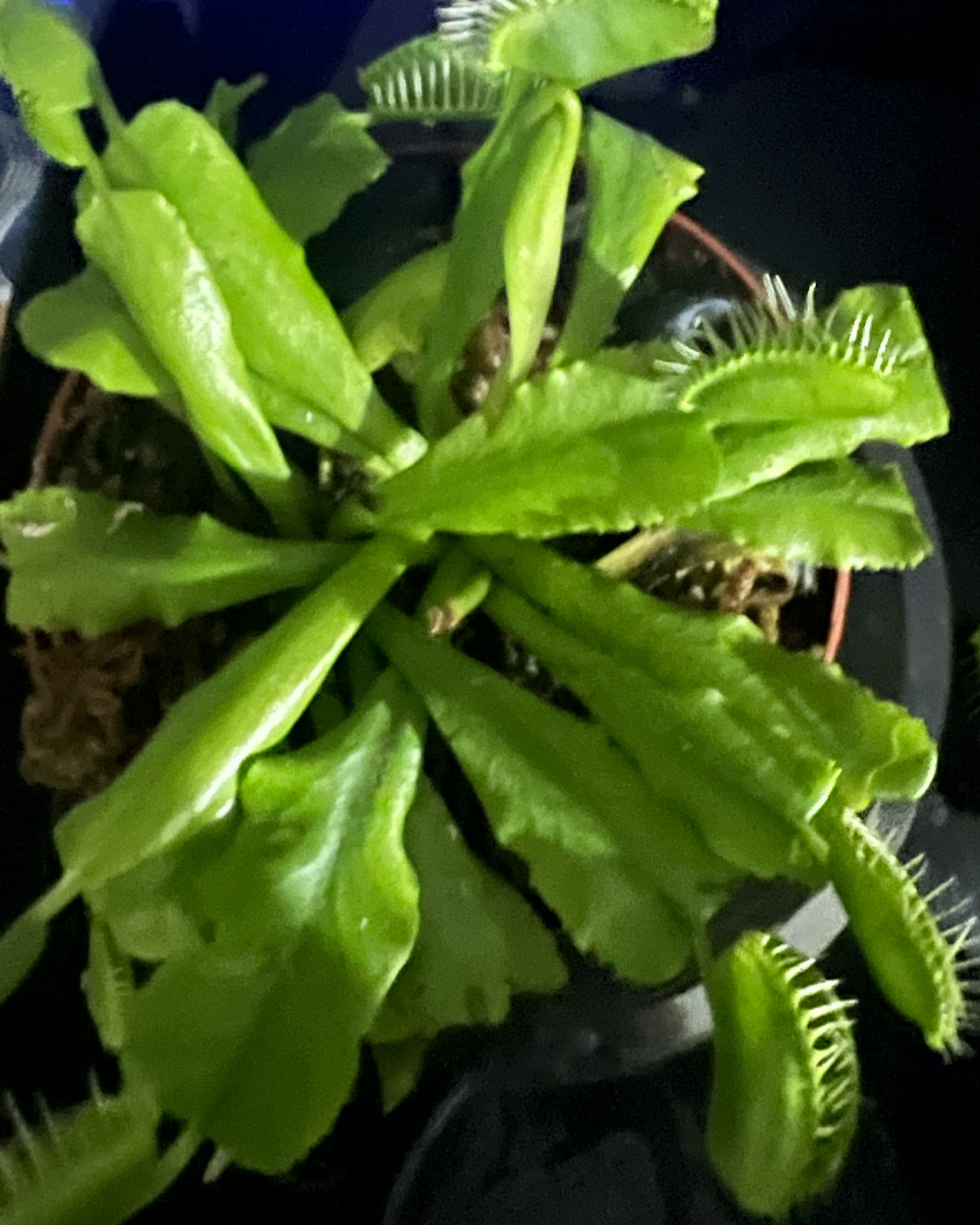
This record follows the actual Venus Flytrap growing in DC’s Indoor FlatScape. It will document new traps, seasonal changes, dormancy, prey capture, propagation, and the lessons that come from observing the plant over time.
Current Specimen
Collection: DC’s Indoor FlatScape
Identification: Dionaea muscipula
Root-zone approach: Specialized nutrient-poor carnivorous-plant medium
Water source: RO water
Current measurements: Not yet entered.
Latest observation: To be updated from the next documented plant check.
What DC Is Learning
This space will record what the plant actually does: new traps, seasonal growth changes, dormancy behavior, prey capture, root development, propagation attempts, and responses to changes in light or water. Observations will be dated so they remain useful as the plant changes.
Field photograph · DC’s Indoor FlatScape
Additional photographs and dated observations will be added as the specimen develops.
THE REFERENCE LIBRARY
Keep the Field Guide
The website dossier is the living reference. The downloadable edition will bring the care information together with expanded procedures, dormancy guidance, propagation techniques, troubleshooting references, and space for personal notes.
Venus Flytrap Care Guide: Edition in preparation.
As the collection grows, this dossier will continue to be updated with new photographs, observations, and related field notes.