
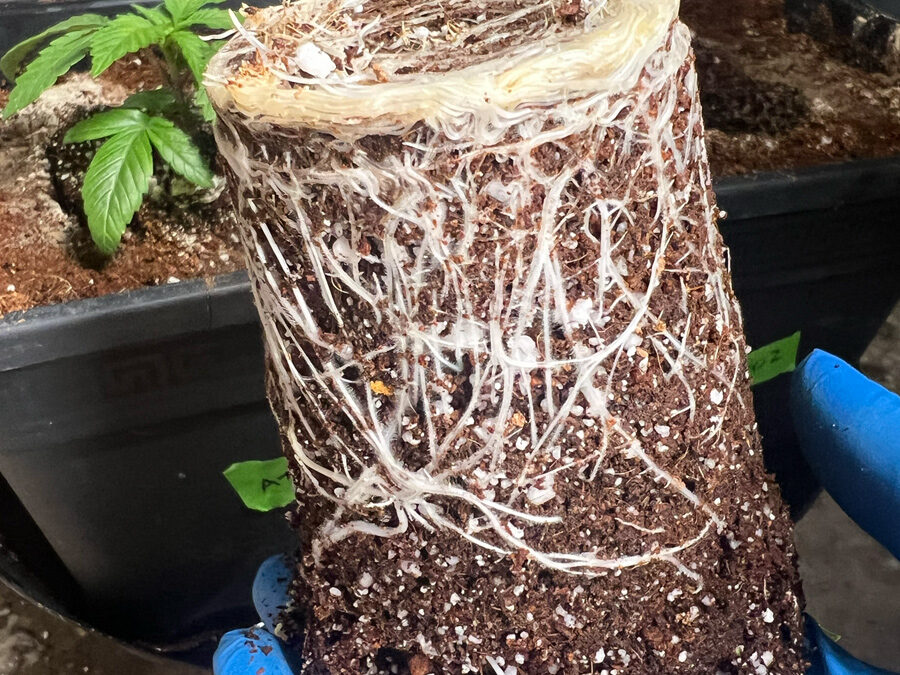
By transplant day, the Solo cups were no longer giving the roots enough room to work. The dense white root mass confirmed what the plants had been telling us. A-04 was the most root-bound of the group, but all four were ready for more space.
DAY 33 FIELD DATA
312 PPM Current Feed
68°F Solution Temp
1 mL/gal FloraGro
1 mL/gal FloraMicro
1 mL/gal FloraBloom
2 mL/gal Cal-Mag
Day 31 Plants Topped
1-gallon Coco + Perlite
5.8 pH
Life has a funny way of reminding you that the garden does not care how busy you are. Over the last several days, these girls made it clear that the Solo cups had done their job. The roots were packed, the pots were drying faster, and the plants were ready for more room. I was probably about ten days late making the move, but that is part of the record too. Sometimes the lesson is not in getting everything perfect. Sometimes it is in recognizing what happened, correcting it, and moving forward.
The Solo Cup Era Ends
I moved all four plants into one-gallon pots filled with coco and perlite. I used the old Solo cups as forms while filling the new containers so each transplant had a clean cavity waiting for its root ball.
Once the cups came off, there was no mystery left. The roots were dense, white, and wrapped heavily around the outside of the media. Potato Runtz A-04 was the most root-bound of the group, which made perfect sense. She had been the biggest plant early on, so she had also filled her container the fastest. In a way, the
small cup probably slowed her down long enough for the other three to catch up.
I do not look at that
as some catastrophic mistake. It is exactly why I document the run. I got behind, the plants showed me what that delay was doing, and I corrected it.
“I guess I kind of stunted her while everyone else caught up. Now they’re ready to go.”
A Light Transplant Drench
Before the plants went into their new homes, I drenched the fresh coco and perlite with a deliberately light nutrient solution. The mix contained 0.5 mL FloraGro, 0.5 mL FloraMicro, 0.5 mL FloraBloom, 1 mL Cal-Mag, and a single drop of honey per gallon. The final solution measured 205 PPM at 5.8 pH and 70°F.
I sprinkled Great White Mycorrhizae into each Solo-cup-shaped planting hole before transplanting, then applied a little more directly to the exposed root balls. Once each plant was seated, I used the remaining solution to lightly settle the media around the roots and allowed the pots to drain completely before returning them to their trays.
Day 31: The First Tops Come Off
Two days before today’s feed, I topped all four plants. I had originally planned to top earlier, but once the transplant became necessary, I decid
ed to let the roots settle first. That turned out to be the right call. By Day 31, the plants were established in their one-gallon pots, the new growth looked healthy, and they were ready for the next step.
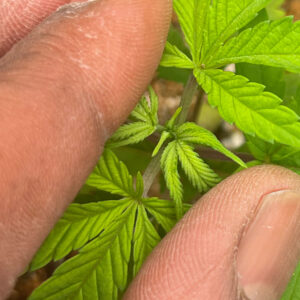
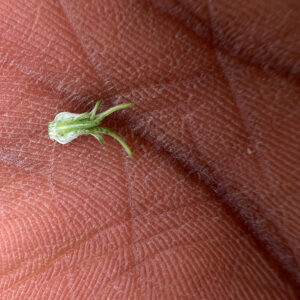 Topping removes the dominant growing tip and interrupts apical dominance, encouraging the lower growth points to compete more aggressively. Instead of allowing each plant to keep building around one vertical leader, the goal is to create a wider, more even canopy that can make better use of its quadrant under the light. So far, all four plants have handled the topping without any visible stress.
Day 33: Hungry Again
By Day 33, the one-gallon pots had dried down and the plants were clearly ready to eat. Yellowing had become more noticeable, especially in the older growth, but the tops still looked healthy and active. This was the first real feed since transplanting, so I kept the increase measured instead of trying to make up for lost time all at once.
Healthy Tops, Yellow Bottoms
The older leaves are still carrying some of the yellowing from the stretch between feeds, but the part I care about most right now is the new growth. The tops are coming in healthy, the plants showed no visible stress from topping, and all four are continuing to move forward.
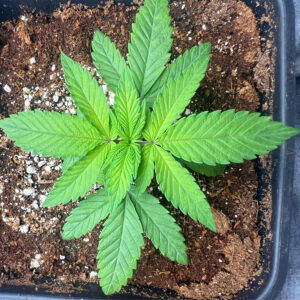 A-03 is still the standout visually. She started this run as the smallest plant in the group, but she has continued to fill out, stay compact, and build a balanced canopy. At this point, she may be the best-looking plant in the tent.
From here, the plan is simple. Keep the root zone fed, watch how the new growth responds, and start shaping the canopy as the new branches take over. The delay is behind us now. The girls have room, they have food, and they are finally ready to run.
Full steam ahead.
Knowledge grows. We just give it
direction.