
Meanwhile…Back on Earth
Not every day inside Herbal Rotation Labs is about watering plants, adjusting lights, or watching the garden grow.
Sometimes the work is about what happens after the harvest.
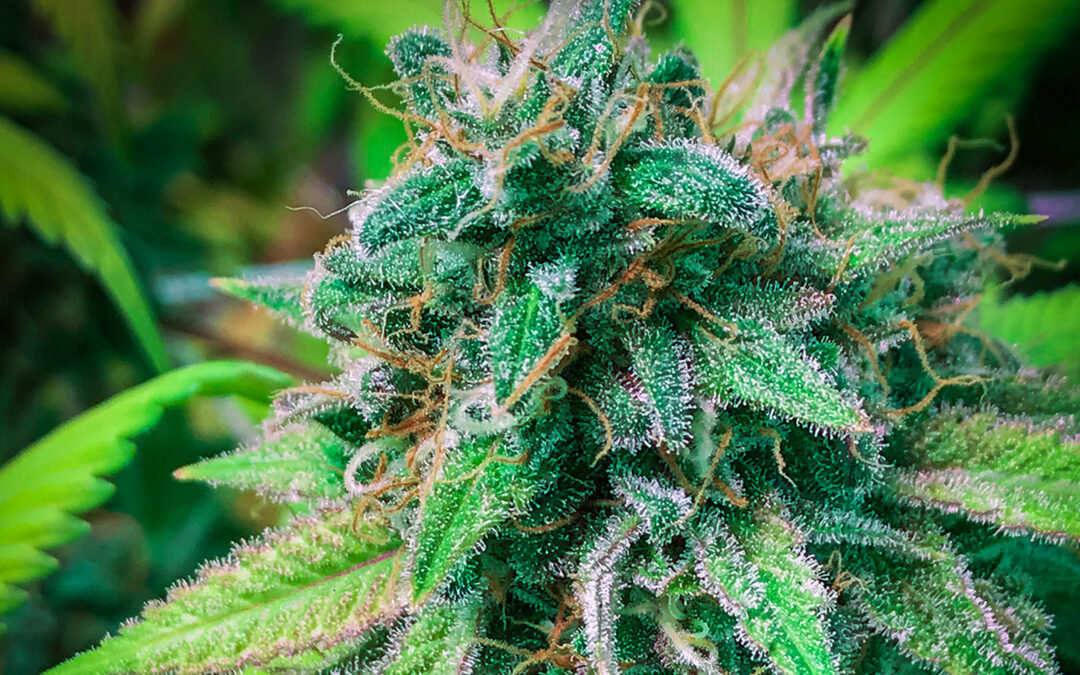
Today, DC is back in the lab working with 35 grams of Ninja Fruit, testing at 22.8% THC, and preparing a coconut oil infusion using the MagicalButter system.
But this is about more than making a potent batch of infused oil.
For DC, it has always been about the people.
More Than a Plant
DC’s relationship with cannabis has never been limited to growing good flower. A major part of the passion behind Herbal Rotation comes from seeing what this plant can mean to people who are suffering.
Over the years, that has included patients and others dealing with a wide range of ailments and symptoms. Cancer. Chronic pain. Loss of appetite. Insomnia. Nausea. Anxiety. The side effects of aggressive treatments. And sometimes simply trying to make it through another difficult night with a little more comfort.
Every person’s circumstances are different, and cannabis is not a cure-all. But seeing people search for relief has given DC a reason to keep learning.
That means learning the plant from seed to harvest, but it also means understanding what happens afterward.
How do you preserve what you grew?
How do you make an infusion more consistent?
How do you estimate its strength?
And how do you take something cultivated with care and turn it into a form that may be more practical for someone who does not want, or cannot tolerate, smoking?
Those questions are part of the work too.
Knowledge grows. We just give it direction.
Today’s Experiment: Ninja Fruit
The starting material for this session is:
- Ninja Fruit: 35 grams
- THC: 22.8%
- Coconut oil: 3¾ cups
- Equipment: MagicalButter Decarb Box and MagicalButter Machine
Before the flower can be infused into the coconut oil, however, it first has to be properly decarboxylated.
And that’s where today’s first lesson appeared.
When Does the Decarb Timer Really Start?
The initial plan was to decarb the material at 250°F for 30 minutes.
After approximately 30 minutes in the oven, however, the temperature probe positioned in the center of the Decarb Box was only reading about 230°F.
That raised an important question:
Does the 30-minute timer begin when the box goes into the oven, or when the material actually reaches the target temperature?
For this run, the decision was to allow the material to come up to the intended temperature before treating the full decarb period as underway.
It is a small detail, but details matter.
The oven temperature and the temperature inside a container full of plant material are not necessarily the same thing at the same moment. The flower, container, and surrounding air all need time to come up to temperature.
That’s exactly why we’re documenting these experiments.
The objective isn’t simply to get through the process. It’s to understand it.
From Decarb to Coconut Oil
Once the decarboxylation is complete, the Ninja Fruit can move into the MagicalButter Machine with the 3¾ cups of coconut oil for the infusion stage.
Coconut oil is particularly useful because of its versatility. The finished infusion can potentially become the foundation for capsules, edibles, recipes, topical formulations, or carefully measured individual servings.
And that versatility matters when you’re thinking about patients.
Someone struggling with appetite may have very different needs from someone trying to sleep through the night. Someone undergoing cancer treatment may have completely different circumstances from a person managing persistent discomfort.
The goal is not simply stronger.
The goal is understanding what you’re making.
Running the Numbers
With 35 grams of flower at 22.8% THC, the starting material contains a theoretical maximum of:
35,000 mg × 22.8% = 7,980 mg THC
That does not mean the finished coconut oil will contain 7,980 mg of THC.
Decarboxylation, extraction efficiency, material left behind during straining, and other variables all reduce the final amount.
Using a rough 80% recovery estimate for documentation purposes would put the batch around:
6,384 mg THC total
Spread across 3¾ cups of coconut oil, that would work out to approximately:
1,702 mg per cup
106 mg per tablespoon
35 mg per teaspoon
These are estimates, not laboratory test results, and that distinction is extremely important.
When dealing with infused products, especially something intended for another person, guessing at potency isn’t good enough. Calculations can provide a working estimate, but proper laboratory analysis is the only way to establish the actual cannabinoid concentration of the finished oil.
That is another lesson worth recording in the lab notebook.
Why DC Keeps Doing This
There is a human being on the other side of all this science.
That’s easy to forget when we’re talking about percentages, temperatures, extraction efficiency and milligrams.
For DC, it isn’t forgotten.
There are patients behind this work. There are people who hurt. People who cannot sleep. People who have no appetite. People fighting cancer and other serious illnesses. People who have tried one thing after another looking for something that might help them find some relief or simply improve the quality of an otherwise difficult day.
That is where the passion comes from.
Herbal Rotation isn’t about pretending cannabis can solve every medical problem. It is about respecting the plant enough to study it, respecting the science enough to keep learning, and respecting the people using it enough to take the process seriously.
Every grow teaches something.
Every harvest teaches something.
And apparently, even waiting for a Decarb Box to climb from 230°F to 250°F can teach something.
That’s why we keep notes.
That’s why we experiment.
That’s why we keep growing.
Because somewhere beyond the tent, the lights, the nutrients and the laboratory equipment, there may be someone who benefits from what we learn.
Know What You Blow.
And when it’s time…
Get Medicated.